CMC Manufacturing Process for CAR-T and Adoptive T Cell Therapies
 발행일:2024-07-25
 조회수:3195
How GMP Reagents and Scalable Manufacturing Support Cell Therapy Development
Meta Description
Explore the CMC manufacturing process for CAR-T and adoptive T cell therapies, including T cell activation, expansion, gene editing, purification technologies, and GMP-grade manufacturing solutions.
Introduction
Adoptive T cell therapies, including CAR-T cell therapy and Tumor-Infiltrating Lymphocyte (TIL) therapy, are transforming modern immuno-oncology and advanced biologics manufacturing. These therapies have shown remarkable clinical success in hematologic malignancies and are increasingly being explored for solid tumors and autoimmune diseases.
As demand for engineered immune cell products continues to grow, scalable and GMP-compliant Chemistry, Manufacturing, and Controls (CMC) strategies have become essential for ensuring product safety, consistency, and regulatory compliance.
The CMC manufacturing process for CAR-T and adoptive T cell therapies involves multiple controlled stages, including:
- T cell isolation
- T cell activation
- Ex vivo expansion
- Genetic engineering
- Cell culture optimization
- Downstream purification
- Quality control and release testing
Because adoptive cell therapies are living products, manufacturing variability can significantly impact therapeutic efficacy and reproducibility. As a result, GMP-grade reagents and standardized workflows play a critical role throughout the entire manufacturing process.
This article explores the major stages of CAR-T manufacturing, key technical challenges, and the importance of GMP-grade ancillary materials in scalable cell therapy production.
What Is the CMC Process in CAR-T Manufacturing?
CMC stands for Chemistry, Manufacturing, and Controls. In cell therapy manufacturing, CMC refers to the framework used to ensure that engineered T cell products are consistently safe, effective, and compliant with regulatory standards.
Compared with traditional biologics, CAR-T manufacturing is significantly more complex because the final product consists of living immune cells. Variability in donor material, T cell phenotype, and transduction efficiency can all affect final product quality.
A typical CAR-T manufacturing workflow includes:
1. Leukapheresis and T cell isolation
2. T cell activation
3. T cell expansion
4. Gene editing or viral transduction
5. Purification and formulation
6. Quality control testing
As CAR-T therapies move toward commercial-scale production, standardized GMP-grade raw materials have become increasingly important for improving manufacturing consistency and scalability.
Major Challenges in CAR-T and T Cell Therapy Manufacturing
Although adoptive T cell therapies have demonstrated strong clinical potential, large-scale commercialization remains challenging.
Key manufacturing challenges include:
- Manufacturing variability caused by patient-derived starting material
- Scalability limitations in labor-intensive workflows
- Batch-to-batch inconsistency in ancillary reagents
- Increasing regulatory expectations for ATMP manufacturing
- High cost of goods (COGs)
Addressing these issues requires optimized CMC strategies, scalable bioprocessing technologies, and highly characterized GMP-grade reagents.
T Cell Activation and Expansion
T cell activation is one of the most important early steps in CAR-T manufacturing. The goal is to mimic physiological immune activation signals and stimulate T cell proliferation before genetic engineering.
The most widely used activation strategy relies on anti-CD3 and anti-CD28 stimulation systems, including:
- Anti-Human CD3 Antibody (OKT3)
- CD3/CD28 antibody-conjugated magnetic beads
These activation systems initiate downstream signaling pathways required for T cell proliferation and differentiation.
Following activation, engineered T cells require optimized culture conditions to support sustained expansion and functional maintenance.
Cytokines play a central role in regulating T cell survival, persistence, and anti-tumor activity. Common cytokines used in CAR-T manufacturing include:
- IL-2
- IL-7
- IL-15
- IL-21
Each cytokine contributes differently to T cell biology. For example, IL-2 promotes rapid proliferation, while IL-15 supports memory T cell persistence.
High-quality GMP-grade activation reagents and cytokines are critical because reagent consistency directly affects:
- T cell expansion efficiency
- Cell phenotype stability
- Manufacturing reproducibility
- Final therapeutic potency
For GMP manufacturing environments, ancillary reagents should ideally be:
- Animal component-free
- Low endotoxin
- Virus tested
- Batch-to-batch consistent
- Manufactured under GMP quality systems
Several GMP-grade activation and cytokine systems are now widely used in commercial and clinical-stage CAR-T manufacturing workflows.
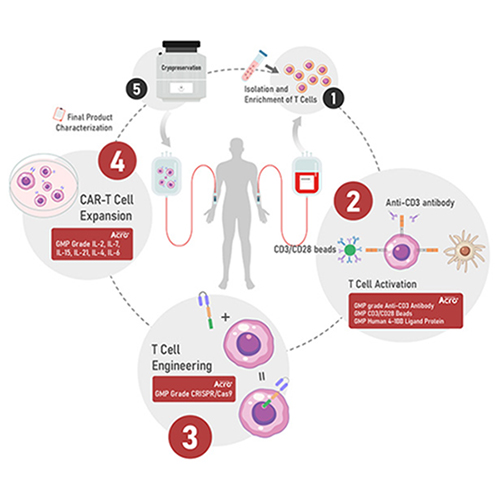
Figure 1. Manufacturing process of CAR-T Cell therapy workflow
Gene Editing and Process Purification
Genetic engineering is the defining step in many adoptive T cell therapies, particularly in allogeneic CAR-T development.
Gene-editing technology such as CRISPR-Cas9 is enabling the development of next-generation off-the-shelf CAR-T products by reducing risks associated with graft-versus-host disease (GvHD) and host immune rejection.
CRISPR/Cas9 editing strategies are commonly used to knock out endogenous T cell receptor (TCR) genes and improve the safety profile of engineered T cells.
For clinical manufacturing applications, GMP-grade Cas9 nucleases should demonstrate:
- High editing efficiency
- Low off-target activity
- High cell viability
- Ultra-low endotoxin levels
For example, ACROBiosystems' GENPower™ NLS-Cas9 Nuclease has demonstrated strong TCR knockout efficiency in both in vitro and in vivo studies.
During lentiviral vector production and plasmid-based engineering processes, residual nucleic acids may remain within the final product stream. These contaminants can introduce potential safety and regulatory risks.
To address these challenges, manufacturers increasingly rely on GMP-grade universal nucleases for efficient nucleic acid removal.
Key performance indicators for nuclease reagents include:
- Efficient DNA/RNA degradation
- Process compatibility
- Stability across manufacturing conditions
- GMP manufacturing compliance
As regulatory standards for advanced therapy medicinal products (ATMPs) continue evolving, effective contaminant removal strategies are becoming increasingly important for commercial cell therapy manufacturing.
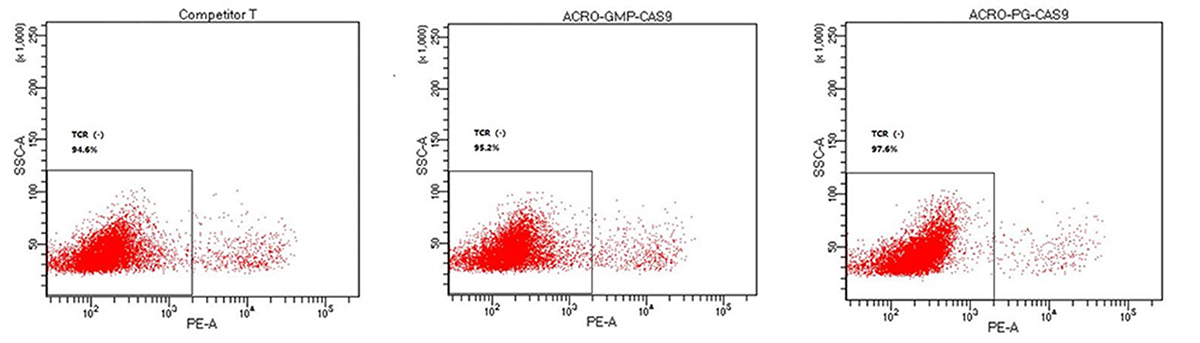
The gRNA and plasmid cutting efficiency and the TCR knockout efficiency with GMP GENPower™ NLS-Cas9 Nuclease (Cat. No. GMP-CA9S18)
Emerging Trends in Cell Therapy Manufacturing
The future of CAR-T and adoptive T cell therapy manufacturing will likely be shaped by:
- Automated closed-system manufacturing
- Allogeneic off-the-shelf CAR-T therapies
- AI-driven bioprocess optimization
- Advanced gene-editing technologies
- Digitalized GMP manufacturing systems
Together, these innovations are expected to improve scalability, reduce production costs, and accelerate commercialization of next-generation immune cell therapies.
FAQ About CAR-T Manufacturing
Q: What is the CMC process in CAR-T manufacturing?
A: The CMC process refers to the Chemistry, Manufacturing, and Controls framework used to ensure CAR-T therapies are consistently safe, effective, and compliant with regulatory standards.
Q: Why are GMP-grade cytokines important in T cell culture?
A: GMP-grade cytokines improve manufacturing consistency, reduce contamination risks, and support regulatory compliance during T cell expansion.
Q: What role does CRISPR play in CAR-T therapy?
A: CRISPR gene-editing technologies are commonly used to knock out endogenous TCR genes and improve the safety profile of allogeneic CAR-T products.
Conclusion
Adoptive T cell therapies are redefining the future of cancer immunotherapy and advanced biologics manufacturing. However, successful commercialization depends heavily on robust CMC manufacturing strategies.
From T cell activation and cytokine-driven expansion to CRISPR-based engineering and downstream purification, every stage of the CAR-T manufacturing workflow requires carefully optimized GMP-grade reagents and scalable manufacturing technologies.
As manufacturing technologies continue evolving, optimized CMC workflows will become increasingly important for improving scalability, reducing production costs, and delivering safer, more effective immune cell therapies to patients worldwide.
Resources


 인기 기사관련 추천인기 활동
 Comprehensive Guide to CAR-T Targets in Solid and Hematologic Malignancies2026-05-21조회수:140
 Bispecific Antibody Lanscape: Evolution, Breakthroughs, and Prospects2026-05-21조회수:127
 CD19 as a CAR-T Target: Biology, Limitations, and Alternative Strategies2026-05-20조회수:111
 Next-Generation Obesity Target Spotlight: Activin E for Fat Loss with Muscle Preservation2026-05-18조회수:242
 Autoimmune Disease Landscape: IL-12/IL-23 Biological Functions and Evolving Targeted Therapies2026-05-18조회수:117





 관련 제품
관련 제품