


BTLA/HVEM Pathway: Emerging Checkpoint Biology Driving Next-Gen Immunotherapy
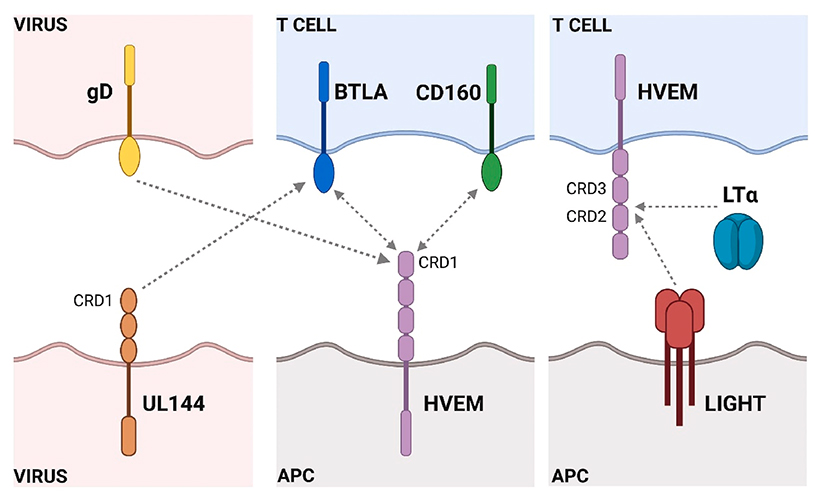
BTLA-HVEM Interaction Network
(https://doi.org/10.1016/j.ejmech.2024.116231)
| Application | Focus |
Representative Programs |
Core Mechanisms |
|---|---|---|---|
|
Tumor Immunotherapy |
Solid tumors & hematologic malignancies |
1. BTLA blockade: Tifcemalimab (anti-BTLA mAb) 2. Dual blockade: Tifcemalimab + Toripalimab (anti-PD-1) |
1. Restore T/NK cell cytotoxicity 2. Reverse T-cell exhaustion 3. Enhance immune cell infiltration into the TME |
|
Autoimmune Diseases |
Inflammatory diseases, atopic dermatitis, Sjögren’s syndrome, SLE, psoriasis |
ANB032 (BTLA agonist) |
1. Suppress autoreactive T-cell activation 2. Reduce excessive inflammatory responses |
|
Neuroimmune Diseases |
Multiple sclerosis, neuromyelitis optica |
VTC-890 (LIGHT/TL1A bispecific mAb) + Interferon β (investigational) |
1. Reduce demyelination 2. Restore immune homeostasis in the CNS |
Product Features
 High purity (MALS/HPLC verified)
Multi-species, multi-tag options
High bioactivity (ELISA/SPR/FACS validated)
Strict QC for batch consistency
Design based on explicit MOA
Stable passage over 20 generations
High sensitivity, strong signal, large detection window
Clinical declaration and CMC document support
 주문
주문Validation Data
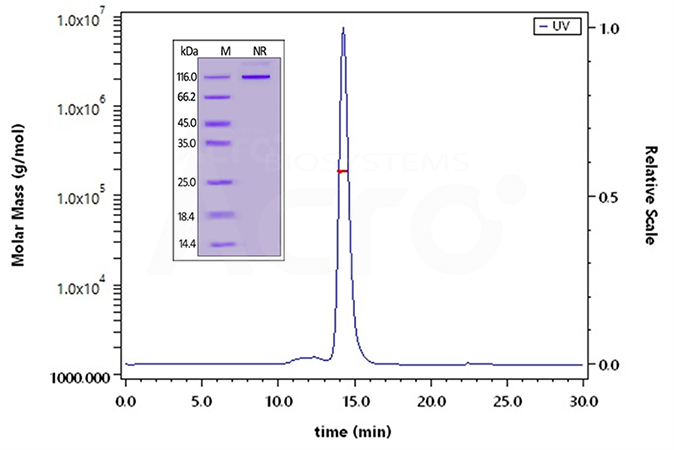
The purity of Human LIGHT Protein, Fc Tag (Cat. No. LIT-H5269) is more than 95% and the molecular weight of this protein is around 180-200 kDa verified by SEC-MALS.
Request Report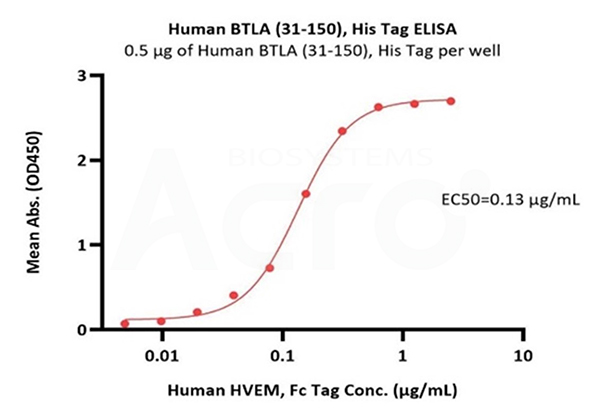
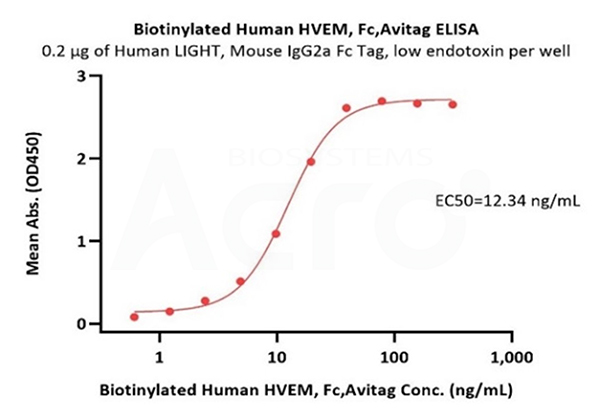
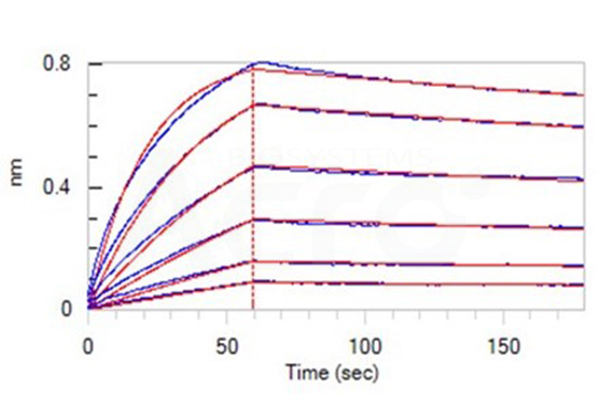
Loaded Human BTLA (31-150), His Tag (Cat. No. BTA-H52H3) on NTA Biosensor, can bind Human HVEM, Mouse IgG2a Fc Tag, low endotoxin with an affinity constant of 20.8 nM as determined in BLI assay (ForteBio Octet Red96e) (Routinely tested).
Request Protocol
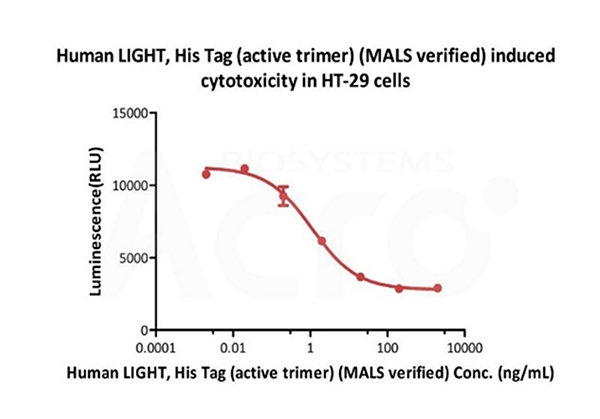
Human LIGHT Protein, His Tag (Cat. No. LIT-H5242) induced cytotoxicity in HT-29 cells. The ED50 for this effect is 1.11-3.87 ng/mL (Routinely tested).
Request Protocol
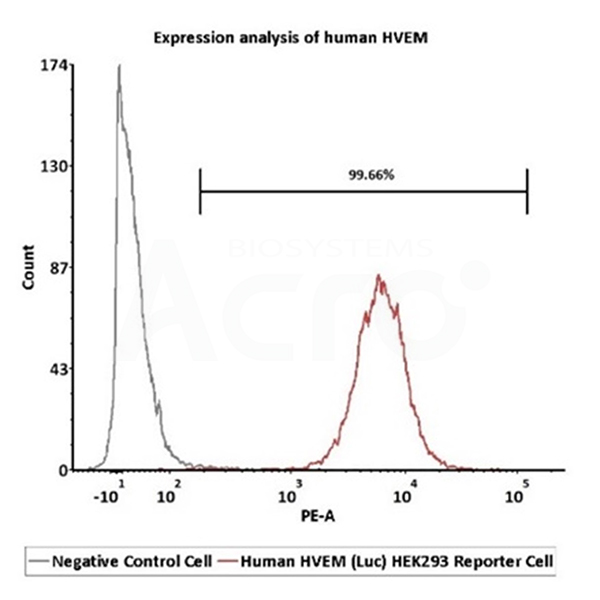
Expression analysis of human HVEM on Human HVEM (Luc) HEK293 Reporter Cell by FACS.Cell surface staining was performed on Human HVEM (Luc) HEK293 Reporter Cell (Cat. No. CHEK-ATF105) or negative control cell using PE-labeled anti-human HVEM antibody
Request Protocol
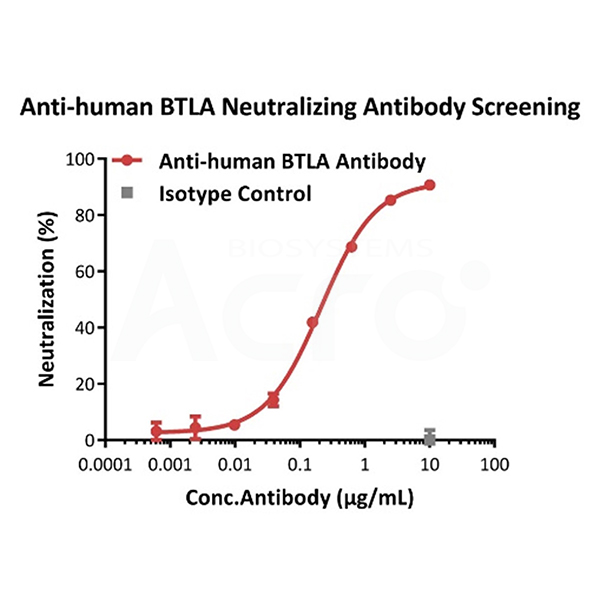
Inhibition of human BTLA overexpressing on CHO cells induced reporter activity by anti-human BTLA antibody.This reporter cell was incubated with serial dilutions of antibodies in the presence of CHO/Human BTLA Stable Cell Line (Cat. No. SCCHO-ATP110). The EC50 of anti-human BTLA neutralizing antibody is approximately 0.212 μg/mL.
Request Protocol
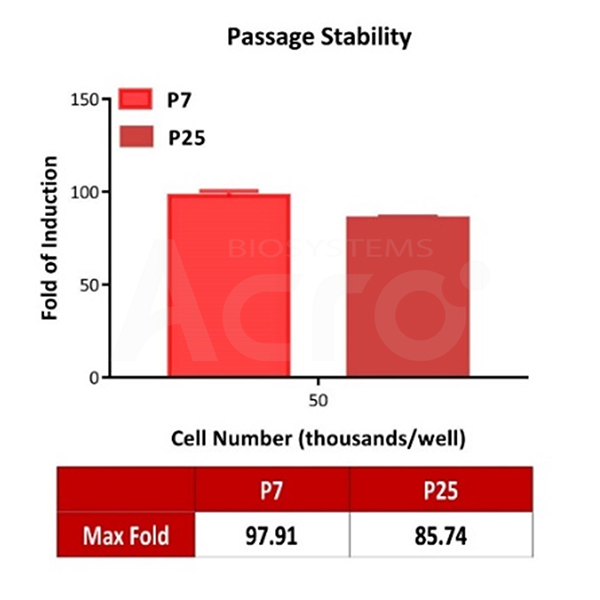
Passage stability analysis by Signaling Bioassay. The continuously growing Human HVEM (Luc) HEK293 Reporter Cell (Cat. No. CHEK-ATF105) was incubated with CHO/Human BTLA Stable Cell Line (Cat. No. SCCHO-ATP110). The human BTLA-overexpressing CHO cells stimulated response demonstrates passage stabilization (fold induction) across passage 7-25.
Request Protocol
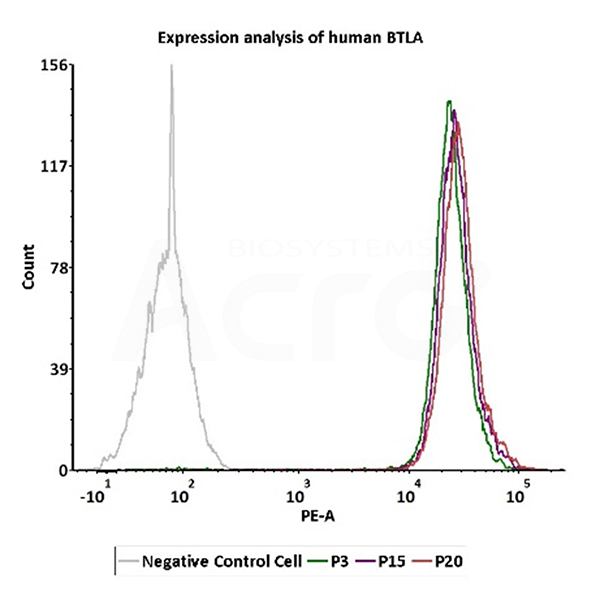
Passage stability analysis of receptor expression by FACS. Flow cytometry surface staining of human BTLA on CHO/Human BTLA Stable Cell Line (Cat. No. SCCHO-ATP110) demonstrates consistent mean fluorescent intensity across passage 3-20.
Clinical Drug Information
| 영어 이름 | 연구 코드 | 연구 개발 단계 | 회사 | 적응증 | 임상 시험 |
|---|---|---|---|---|---|
| Quisovalimab | CERC-002; AEVI-002; MDGN-002; SAR-252067; AVTX-002 | Phase 2 Clinical | Kyowa Hakko Kirin Co Ltd, La Jolla Pharmaceutical Company | Acute Lung Injury; Asthma; Colitis, Ulcerative; Coronavirus Disease 2019 (COVID-19); Crohn Disease; Respiratory Distress Syndrome, Adult | 상세 |
| HFB-200603 | HFB-200603 | Phase 1 Clinical | HiFiBiO Therapeutics | Carcinoma, Non-Small-Cell Lung; Carcinoma, Renal Cell; Colorectal Neoplasms; Melanoma; Neoplasms; Stomach Neoplasms | 상세 |
| HFB200604 AID | HFB-200604-AID; HFB200604; HFB-200604; HFB200604 AID | Phase 1 Clinical | HiFiBiO Therapeutics | Autoimmune Diseases; Inflammation | 상세 |
| Venanprubart | LY-3361237 | Phase 1 Clinical | Eli Lilly And Company, Sanford-Burnham Medical Research Institute | Lupus Erythematosus, Systemic; Psoriasis; Sjogren's Syndrome | 상세 |
| ANB-032 | ANB-032 | Phase 1 Clinical | Anaptysbio Inc | Dermatitis, Atopic; Eczema; Inflammation | 상세 |
| MB-272 | MB272; GS-0272 | Phase 1 Clinical | MiroBio Ltd, University Of Oxford | Arthritis, Rheumatoid; Autoimmune Diseases | 상세 |
| Tifcemalimab | JS-004; TAB-004 | Phase 3 Clinical | Shanghai Junshi Biosciences Co Ltd | Carcinoma, Renal Cell; Carcinoma, Transitional Cell; Esophageal Squamous Cell Carcinoma; Head and Neck Neoplasms; Hodgkin Disease; Lung Neoplasms; Lymphoma; Melanoma; Nasopharyngeal Carcinoma; Neoplasms; Pancreatic Neoplasms; Small Cell Lung Carcinoma; Solid tumours; Squamous Cell Carcinoma of Head and Neck; Triple Negative Breast Neoplasms | 상세 |
Related Product Recommendations
Resource download
- Background
- Product Features
- Product List
- Validation Data
- Clinical Drug Information
- Related Product Recommendations
- Resource download



온라인 메시지
[North America]: 1 Innovation Way, Newark, DE 19711, USA [Switzerland]: ACRObiosystems AG, c/o Zug Dammstrasse Centre AG, Dammstrasse 19, 6300 Zug Switzerland
Email:order@acrobiosystems.com
Copyright © 2025 ACROBiosystems. All Rights Reserved
전화
글로벌: +1 800-810-0816 (무료)
아시아태평양: +86 400-682-2521
주소 서울특별시 송파구 법원로11길 11, 제3층 제비-314,315호