


BsAbs Targeting Immunomodulatory Checkpoints for Cancer Therapy

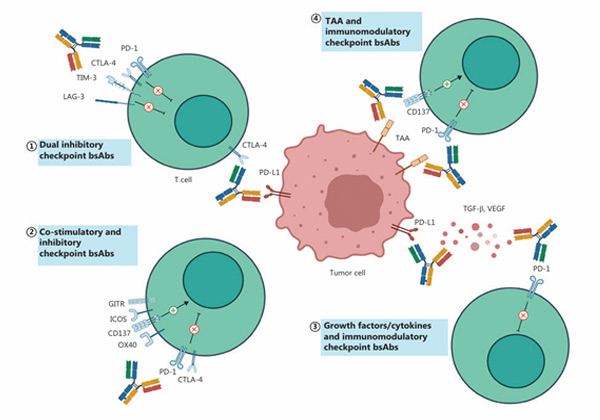
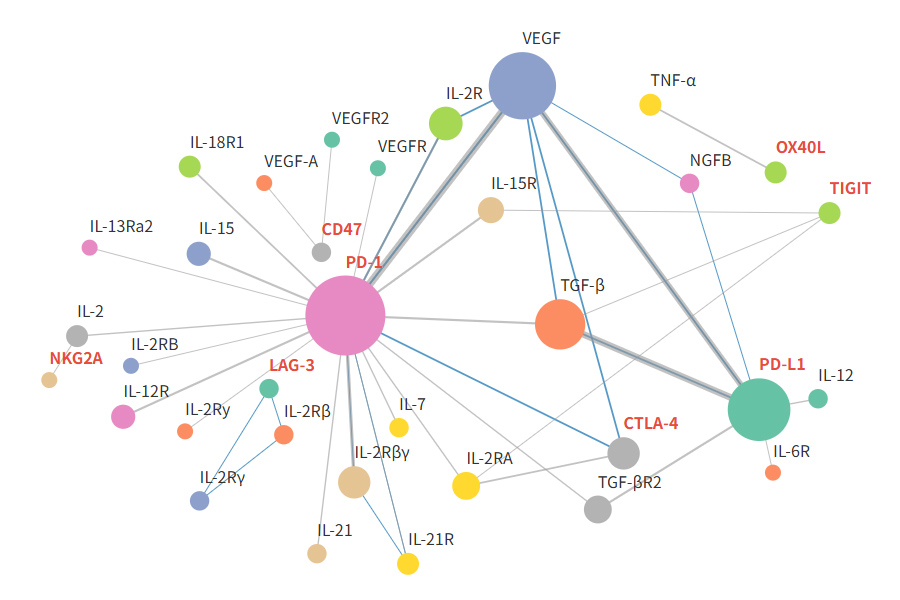
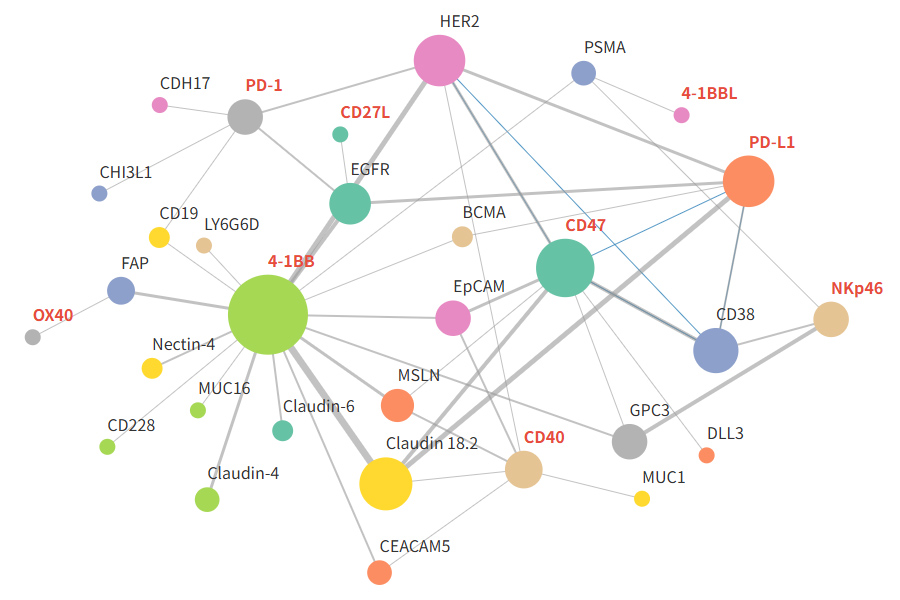
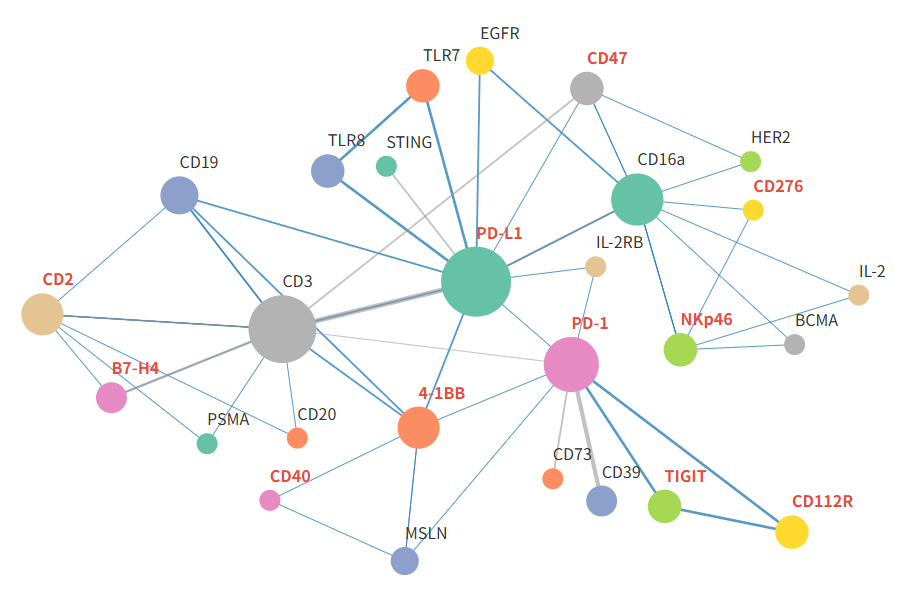
The bsAbs targeting immunomodulatory checkpoints. The checkpoint-targeted bsAbs are mainly divided into three categories: targeting dual inhibitory checkpoints (①); targeting co-stimulatory and inhibitory checkpoints (②); and targeting immunomodulatory checkpoints and non-checkpoint targets (③④).
Source:doi: 10.20892/j.issn.2095-3941.2023.0002
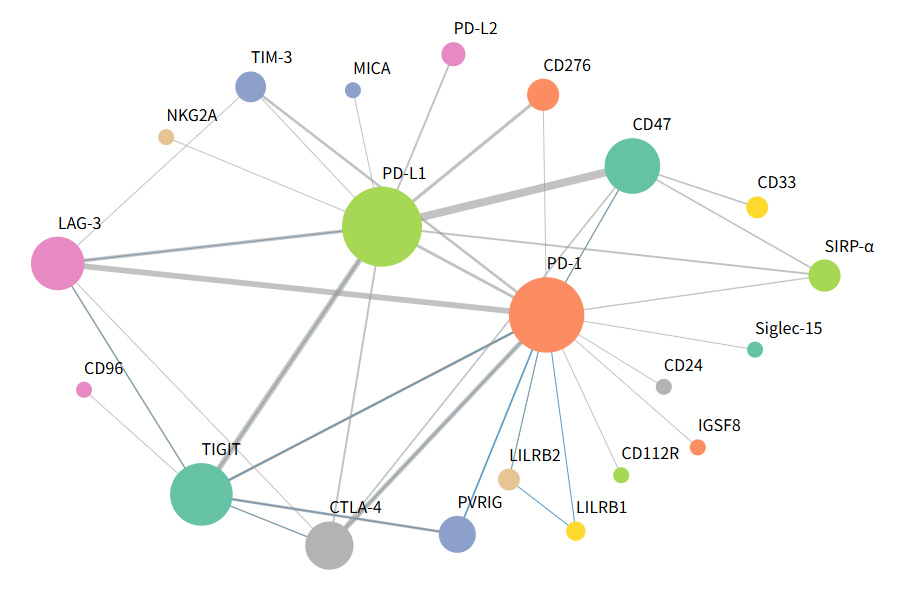
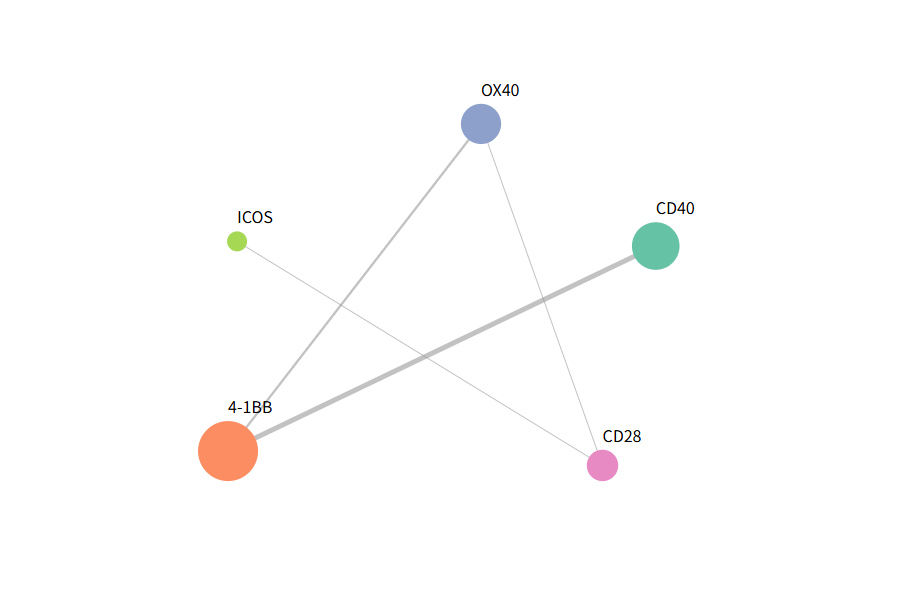
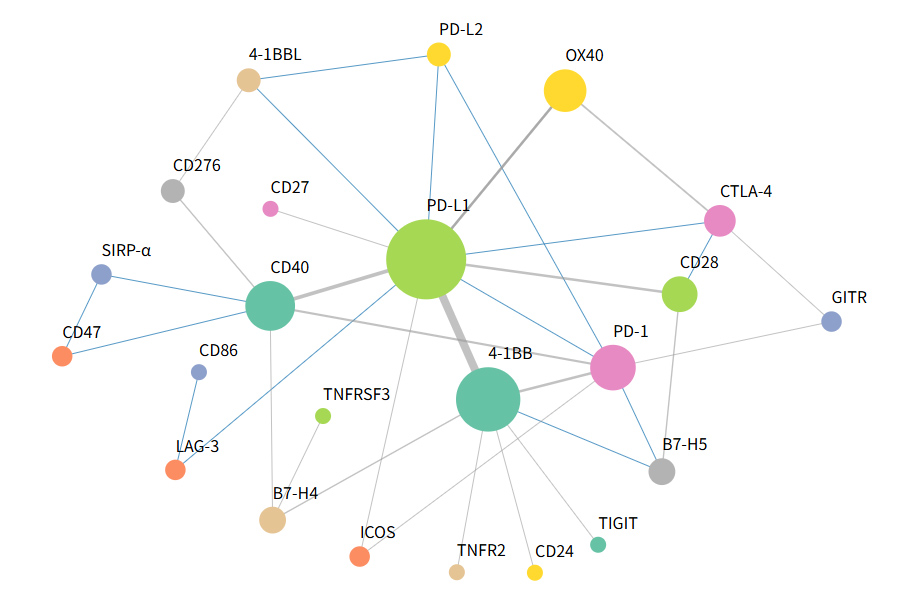
Classification of BsAbs Targeting Immune Checkpoints
Validation Data
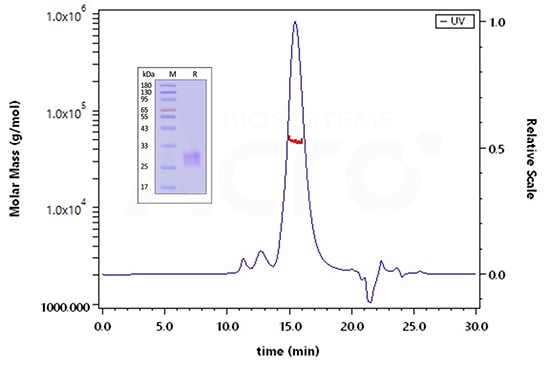
The purity of Human CTLA-4, His Tag (Cat. No. CT4-H52H9) is more than 90% and the molecular weight of this protein is around 45-60 kDa verified by SEC-MALS.
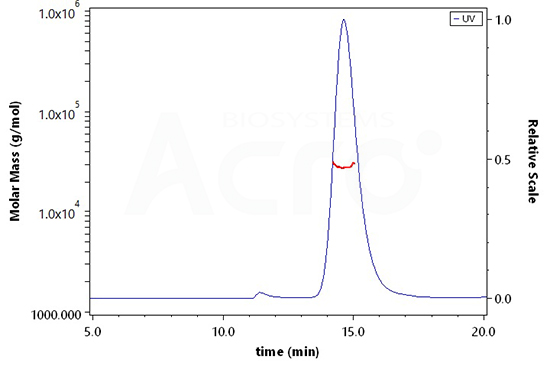
The purity of Biotinylated Human 4-1BB, His,Avitag (Cat. No. 41B-H82E6) is more than 90% and the molecular weight of this protein is around 25-35 kDa verified by SEC-MALS.
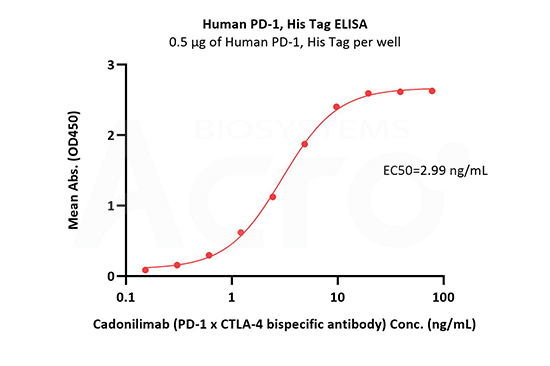
Immobilized Human PD-1, His Tag (Cat. No. PD1-H5221) at 5 μg/mL, add increasing concentrations of Cadonilimab (PD-1 x CTLA-4 bispecific antibody) and then add Biotinylated Human CTLA-4, Fc,Avitag (Cat. No. CT4-H82F3) at 0.2 μg/mL. Detection was performed using HRP-conjugated Streptavidin (Acro, Cat. No. STN-NH913) with sensitivity of 2.99 ng/mL (Routinely tested).
Request Protocol
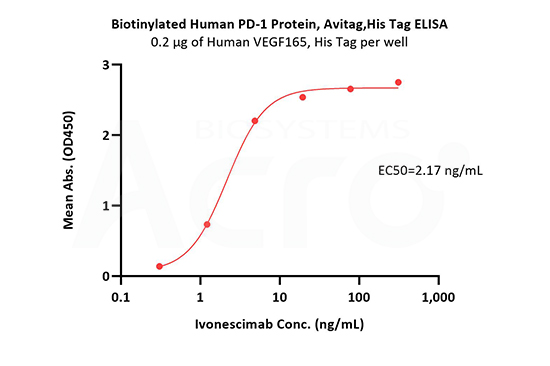
Immobilized Human VEGF165, His Tag (Cat. No. VE5-H5248) at 2 μg/mL, add increasing concentrations of Ivonescimab and then add Biotinylated Human PD-1 Protein, Avitag,His Tag (Cat. No. PD1-H82E4) at 2 μg/mL. Detection was performed using HRP-conjugated Streptavidin (Acro, Cat. No. STN-NH913) with sensitivity of 2.17 ng/mL (Routinely tested).
Request Protocol
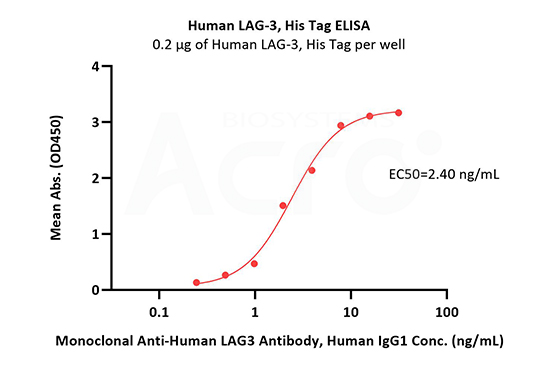
Immobilized Human LAG-3, His Tag (Cat. No. LA3-H5222) at 2 μg/mL (100 μL/well) can bind Monoclonal Anti-Human LAG3 Antibody, Human IgG1 with a linear range of 0.2-4 ng/mL (QC tested).
Request Protocol
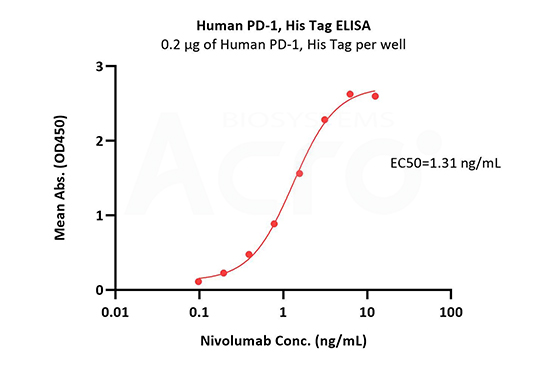
Immobilized Human PD-1, His Tag (Cat. No. PD1-H5221) at 2 μg/mL (100 μL/well) can bind Nivolumab with a linear range of 0.1-3 ng/mL (Routinely tested).
Request Protocol
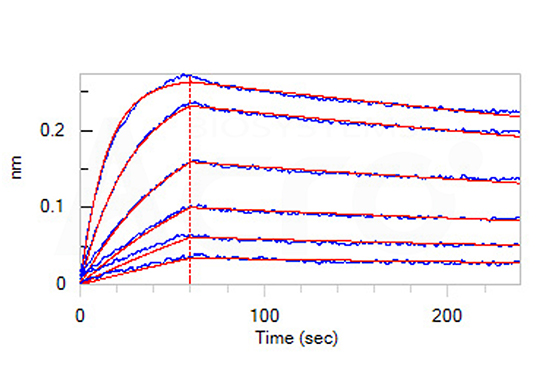
Loaded Anti-OX40 MAb(Human IgG1) on AHC Biosensor, can bind Human OX40 Protein, His Tag (Cat. No. OX0-H5224) with an affinity constant of 6.03 nM as determined in BLI assay (ForteBio Octet Red96e) (Routinely tested).
Request Protocol
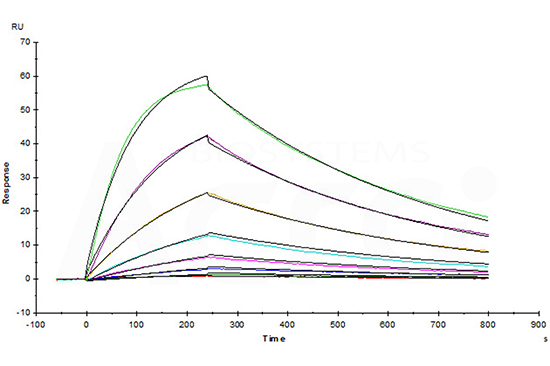
Anti-LAG-3 MAb (Human IgG1) captured on CM5 chip via Anti-Human IgG Fc antibodies surface, can bind Human LAG-3, His Tag (Cat. No. LA3-H5222) with an affinity constant of 4.57 nM as determined in a SPR assay (Biacore T200) (Routinely tested).
Request Protocol
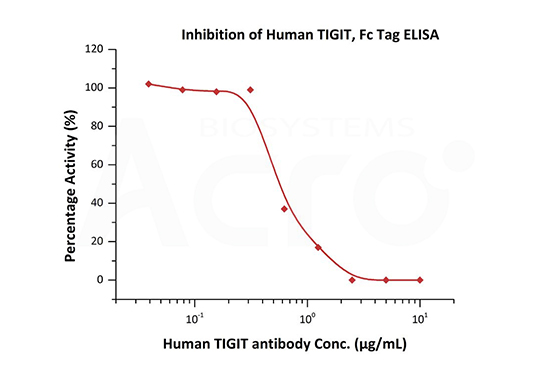
Serial dilutions of Human TIGIT Neutralizing antibody were added into Human TIGIT, Fc Tag (Cat. No. TIT-H5254): Biotinylated Human CD155, Fc,Avitag (Cat. No. CD5-H82F6) binding reactions. The half maximal inhibitory concentration (IC50) is 0.55834 μg/mL (Routinely tested).
Request Protocol
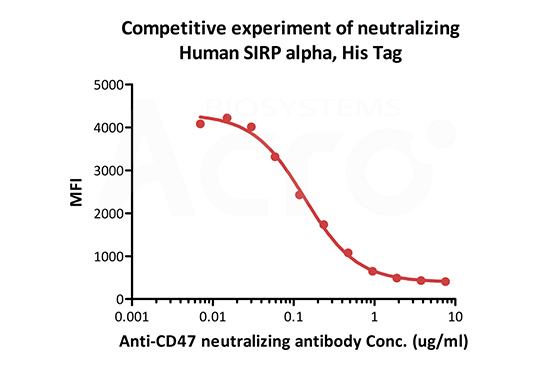
FACS analysis shows that the binding of Human SIRP alpha, His Tag (Cat. No. SIA-H5225) to Jurkat expressing CD47 was inhibited by increasing concentration of neutralizing Anti-CD47 antibody. The concentration of SIRP alpha used is 1 μg/mL.
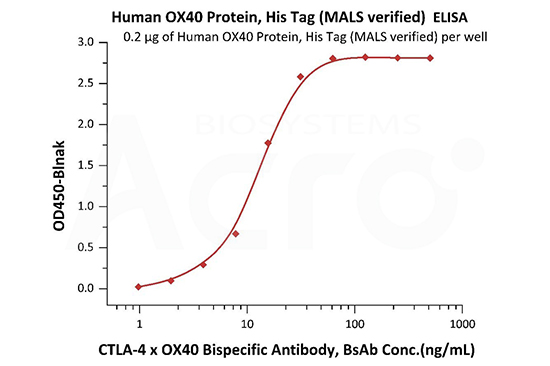
Quantitative Analysis of CTLA-4 x OX40 Bispecific Antibody in Human Serum by Intact Assay. Immobilized Human OX40 Protein, His Tag (MALS verified) (Cat. No. OX0-H5224) at 2 μg/mL, add increasing concentrations of CTLA-4 x OX40 bispecific antibody in 50% Human serum and then add Biotinylated Human CTLA-4, His, Avitag (Cat. No. CT4-H82E3) at 0.2 μg/mL. Detection was performed using HRP-conjugated streptavidin with sensitivity of 4 ng/mL (Intact assay, Routinely tested).
Request Protocol
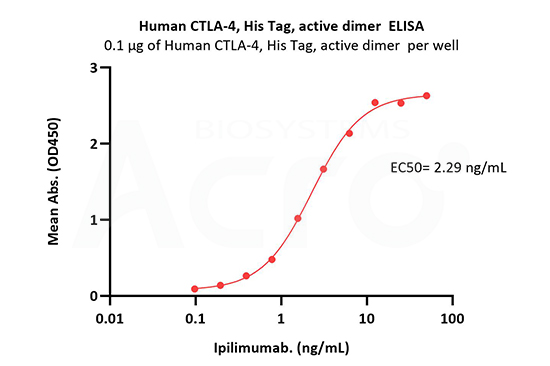
Quantitative Analysis of CTLA-4 x OX40 Bispecific Antibody in Human Serum by Intact Assay Immobilized Human CTLA-4, His Tag, active dimer (Cat. No.CT4-H52H9) at 2 μg/mL, add increasing concentrations of CTLA-4 x OX40 Bispecific Antibody in 50% Human serum and then add Biotinylated Human OX40, Avitag,His Tag(Cat. No. TN4-H82E4) at 1 μg/mL. Detection was performed using HRP-conjugated streptavidin with sensitivity of 4 ng/mL (Intact assay, Routinely tested).
Request Protocol
Resource
Resources


Related Reading
Featured Recommendations
- Background
- Classification of BsAbs Targeting Immune Checkpoints
- Validation Data
- Resource



온라인 메시지
[North America]: 1 Innovation Way, Newark, DE 19711, USA [Switzerland]: ACRObiosystems AG, c/o Zug Dammstrasse Centre AG, Dammstrasse 19, 6300 Zug Switzerland
Email:order@acrobiosystems.com
Copyright © 2025 ACROBiosystems. All Rights Reserved
전화
글로벌: +1 800-810-0816 (무료)
아시아태평양: +86 400-682-2521
주소 서울특별시 송파구 법원로11길 11, 제3층 제비-314,315호