


Full-Length STEAP Family Proteins
Focus on Emerging Targets at the Forefront of Research
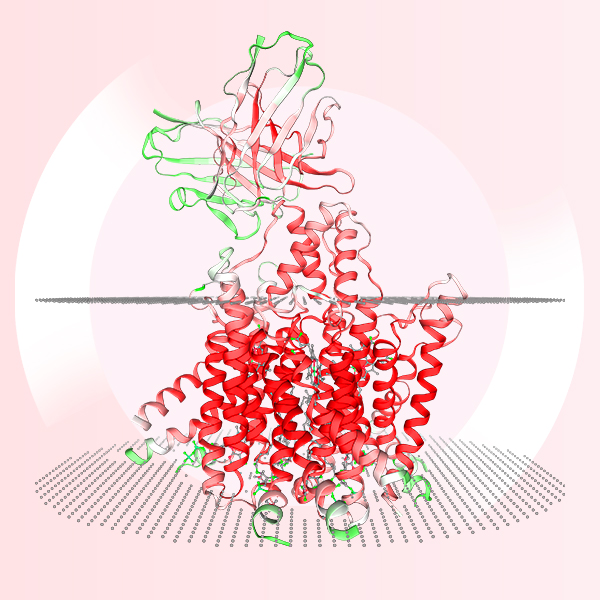
STEAP1 lacks a cytosolic oxidoreductase domain but functions through the formation of homo- or heterotrimers. It is highly expressed in over 85% of prostate cancer tissues and remains consistently elevated in metastatic castration-resistant prostate cancer (mCRPC). Consequently, STEAP1 is considered as a key target for prostate cancer diagnosis and targeted therapy. Aberrant overexpression has also been reported in multiple malignancies, including bladder, colorectal, and ovarian cancers.
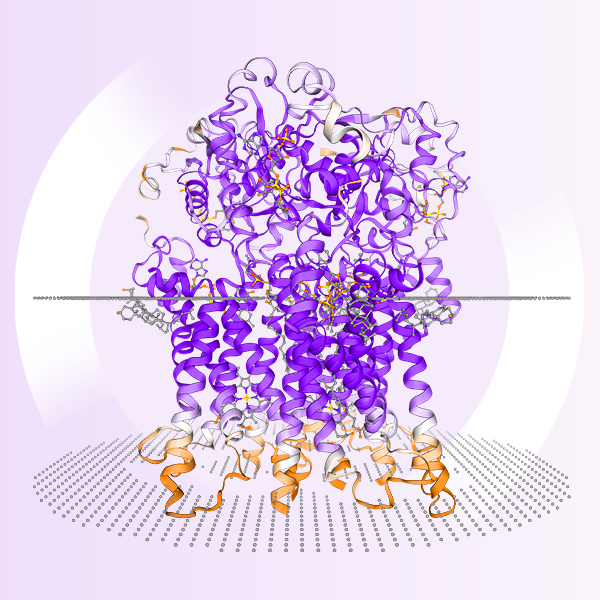
STEAP2 possesses canonical metalloreductase activity, catalyzing the reduction of Fe³⁺ to Fe²⁺ and Cu²⁺ to Cu⁺, thereby regulating cellular iron and copper metabolism. It is highly expressed in several tumor types, including prostate, pancreatic, and breast cancers, and is closely associated with tumor cell proliferation, invasion, and metabolic reprogramming. STEAP2 is therefore regarded as a potential prognostic biomarker and therapeutic target in oncology.
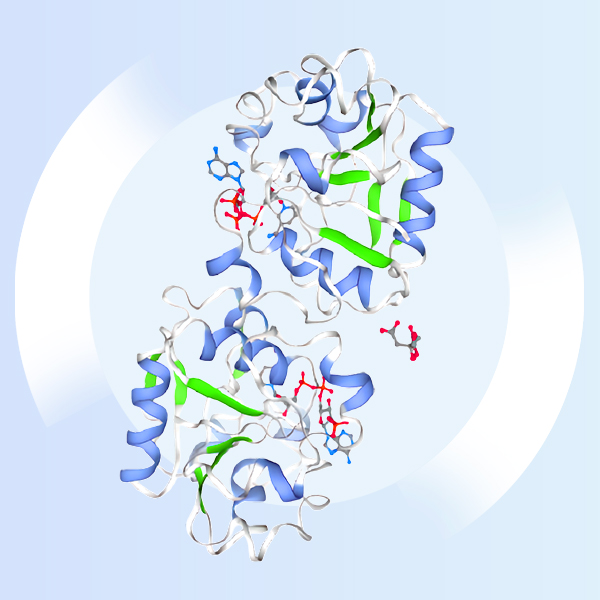
STEAP3 is primarily localized to endosomes and lysosomes and plays a central role in iron metabolism. By reducing ferric iron, it supports hemoglobin synthesis and the maintenance of cellular iron homeostasis. Dysregulated STEAP3 expression has been linked to diseases associated with iron metabolism disorders as well as to tumor development in cancers such as lung and gastric cancer. In addition, it has research relevance in non-oncology conditions including anemia.
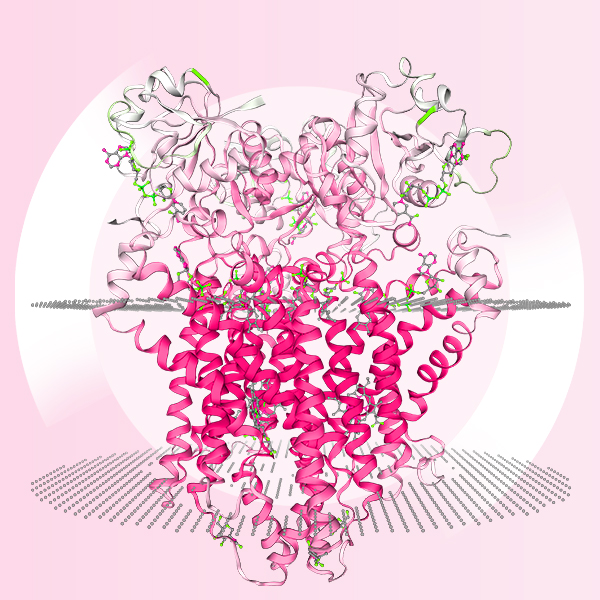
STEAP4 exhibits both metalloreductase activity and signaling functions. In addition to participating in iron and copper metabolism, it regulates inflammatory responses and cellular energy metabolism. Abnormal expression of STEAP4 has been reported in metabolic disorders such as obesity and diabetes, as well as in hepatocellular carcinoma and colorectal cancer, highlighting its potential as a cross-disease research target.
Given their critical biological functions and central roles in tumor biology, the STEAP family has emerged as a prominent class of innovative targets in global drug development. According to Pharmacodia Data, pipelines targeting STEAP proteins span diverse advanced therapeutic modalities, including monoclonal antibodies, bispecific antibodies, antibody–drug conjugates (ADCs), and CAR-T therapies. These programs are directed against a spectrum of high-incidence solid tumors such as prostate, lung, and gastric cancers, highlighting their considerable clinical potential. The dynamic and expanding R&D landscape underscores the strategic value of STEAP targets, positioning them as key focus areas in next-generation oncology drug development.
>> Scroll to view more
STEAP Pipeline and Development Progress (Source: Pharmacodia)
Advancing STEAP Proteins to Overcome Key Research Challenges
Stringent Quality Validation Ensuring Product Excellence
 Order
OrderVerification Data
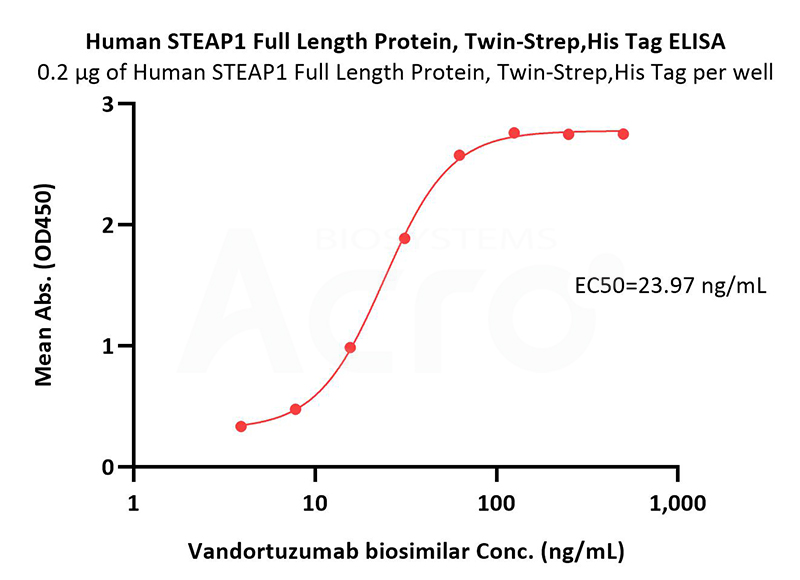
Immobilized Human STEAP1 Full Length Protein, Twin-Strep,His Tag (Cat. No. ST1-H5283) at 2 μg/mL (100 μL/well) can bind Vandortuzumab biosimilar with a linear range of 4-63 ng/mL (QC tested).
Request Protocol
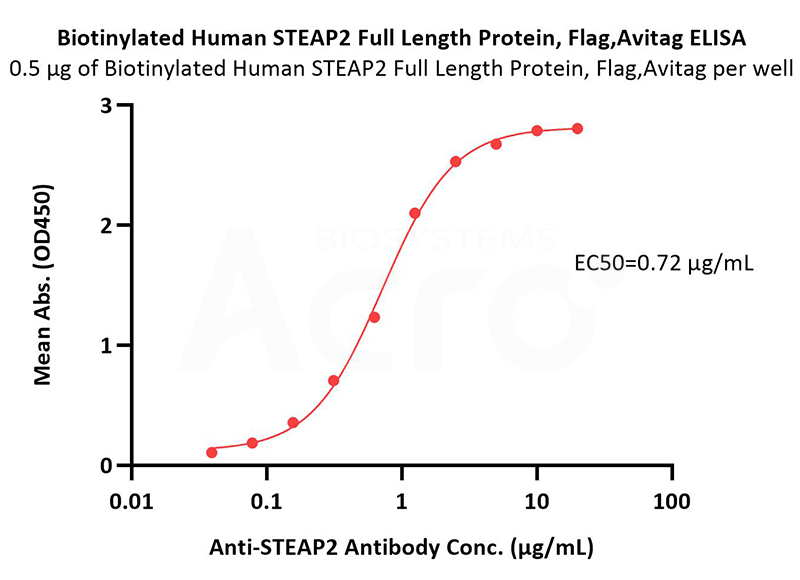
Immobilized Biotinylated Human STEAP2 Full Length Protein, Flag,Avitag (Cat. No. ST2-H85D3) at 5 μg/mL (100 μL/well) on streptavidin (Cat. No. STN-N5116) precoated (0.5 μg/well) plate can bind Anti-STEAP2 Antibody with a linear range of 0.04-1.25 μg/mL (QC tested).
Request Protocol
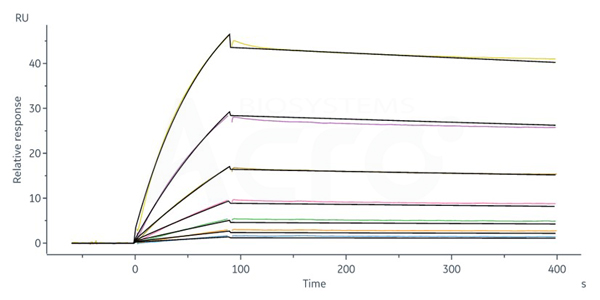
Anti-STEAP (Vandortuzumab) captured on Protein A Chip can bind Human STEAP1 Full Length Protein, Twin-Strep,His Tag (Cat. No. ST1-H5283) with an affinity constant of 2.30 nM as determined in a SPR assay (in presence of DDM and CHS) (Biacore 8K) (QC tested).
Request Protocol
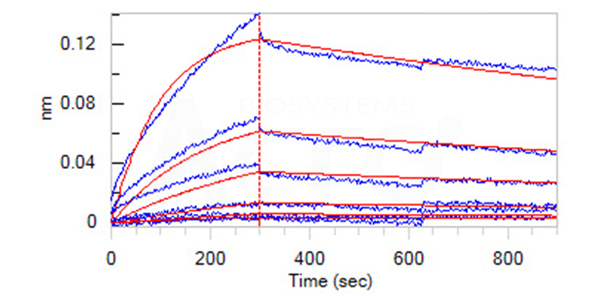
Loaded Anti-STEAP1 Antibody on Protein A Biosensor, can bind Biotinylated Human STEAP1 Full Length Protein, Avitag, Flag&His Tag (Cat. No. ST1-H82D3) with an affinity constant of 8.26 nM as determined in BLI assay (in presence of DDM and CHS) (ForteBio Octet R8) (Routinely tested).
Request Protocol
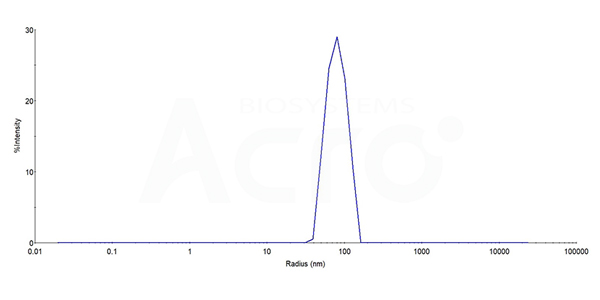
The mean peak Radius of Human STEAP3 Full Length Protein (ST3-H52P3) is 65-90 nm with more than 95% intensity as determined by dynamic light scattering (DLS).
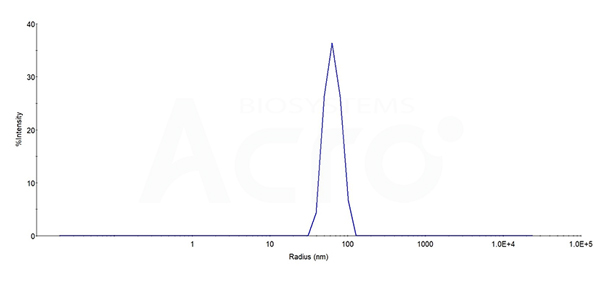
The mean peak Radius of Human STEAP4 Full Length Protein (Cat. No. ST4-H52P3) is 60-80nm with more than 95% intensity as determined by dynamic light scattering (DLS).
Related Product Recommendations


Resources
Brochure Download
![[Brochure] Antibody-Drug Conjugates (ADCs)](https://console.acrobiosystems.com/public/images/steap/ateap_resources01en.png)



- Background
- Focus on Emerging Targets at the Forefront of Research
- Advancing STEAP Proteins to Overcome Key Research Challenges
- Stringent Quality Validation Ensuring Product Excellence
- Product List
- Verification Data
- Related Product Recommendations
- Resources



Online Message
[North America]: 1 Innovation Way, Newark, DE 19711, USA [Switzerland]: ACRObiosystems AG, c/o Zug Dammstrasse Centre AG, Dammstrasse 19, 6300 Zug Switzerland
Email:order@acrobiosystems.com
Copyright © 2025 ACROBiosystems. All Rights Reserved
전화
글로벌: +1 800-810-0816 (무료)
아시아태평양: +86 400-682-2521
주소 서울특별시 송파구 법원로11길 11, 제3층 제비-314,315호