

Overview

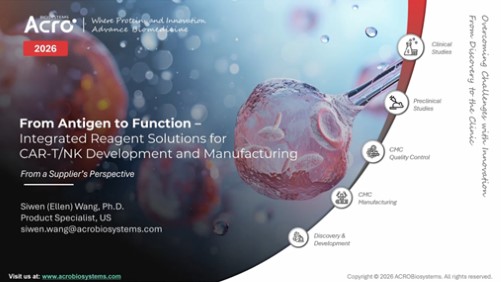
Cell and gene therapy has never been more exciting, with rapid advances driving the field from research to clinical practice. Innovations such as CAR-NK therapies, next-generation CAR constructs, and the discovery of novel target antigens continue to expand clinical applications and commercial opportunities. However, manufacturing and commercializing cell therapies have never been more challenging. New, updated guidelines and regulations are constantly evolving to catch up with the discovery and implementation of impactful, innovative cell and gene therapies. Helping our partners navigate and advance their cell and gene therapies has always been a cornerstone in ACROBiosystems, starting from the very first recombinant antigen sold from us. With our products and reagents, we strive to provide the highest quality products possible, tailored for your cell and gene therapy needs and applications.
Overview

Resources

Comprehensive Quality Control Solution for Biologics

Comprehensive Quality Control Solution for Biologics

Request PDF
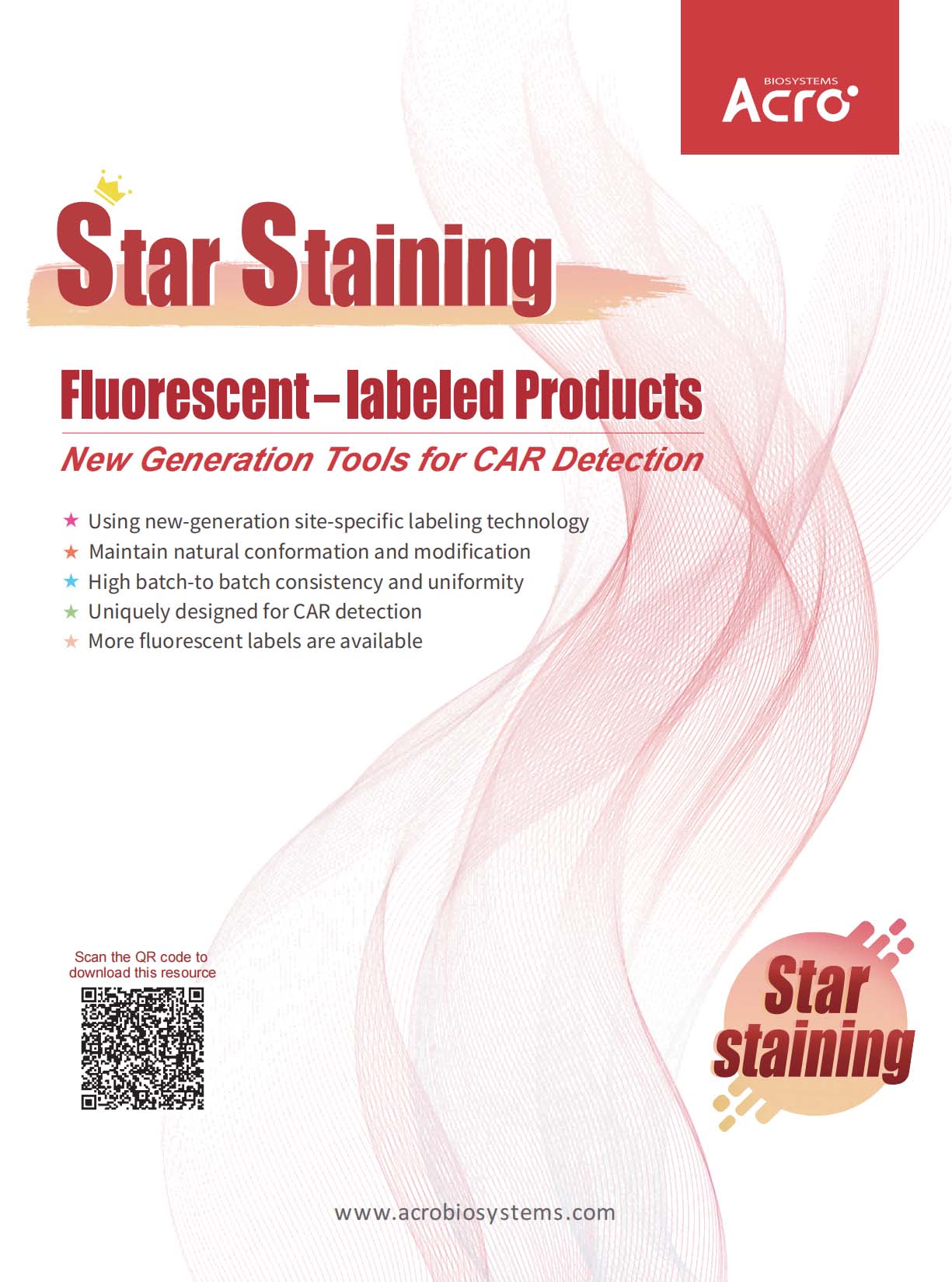
Star Staining - Fluorescent labeled Products

Star Staining - Fluorescent labeled Products

Request PDF
Solutions of Immune Cell Therapy Development

Solutions of Immune Cell Therapy Development

Request PDF
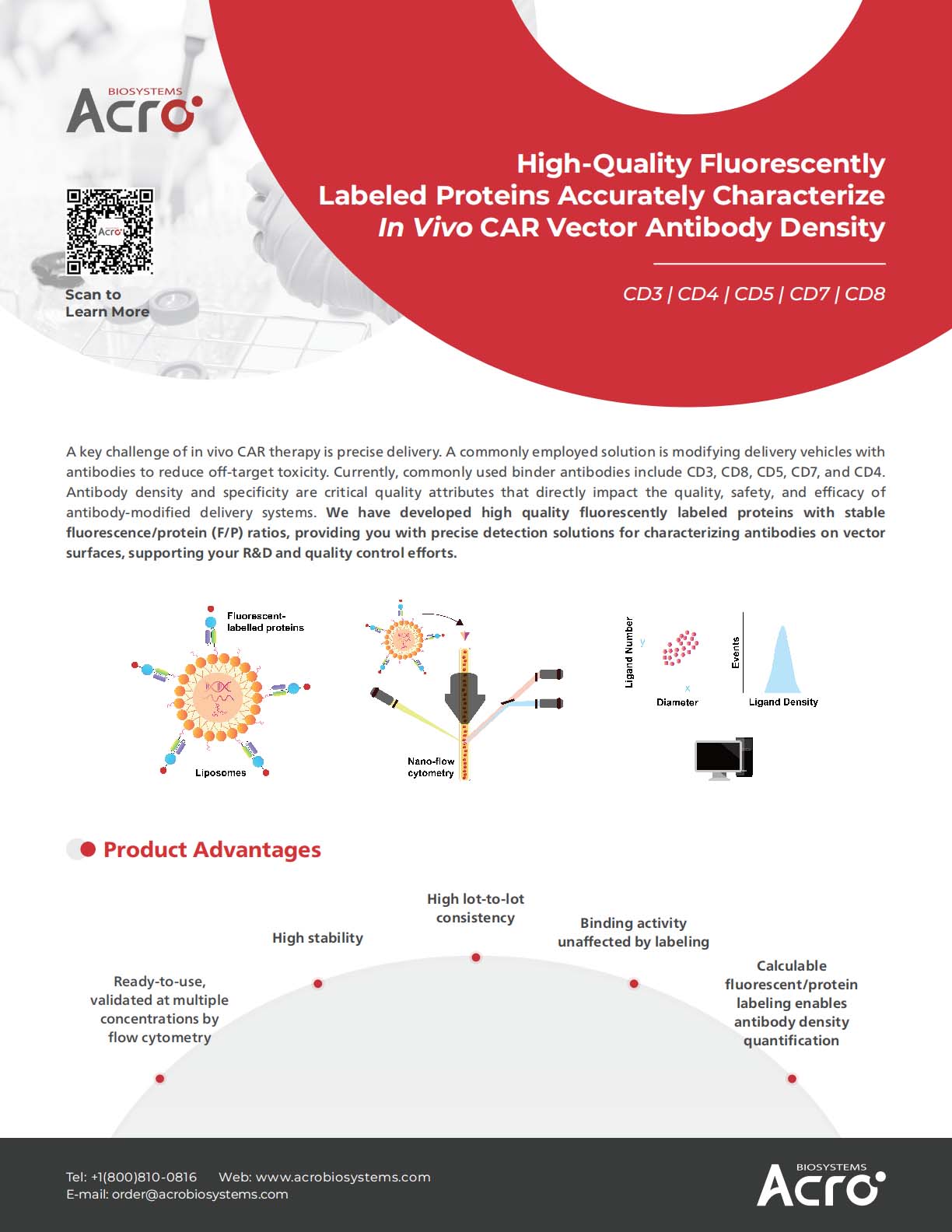
Accurately Characterize In Vivo CAR Vector Antibody Density

Accurately Characterize In Vivo CAR Vector Antibody Density

Request PDF
Comprehensive Quality Control Solution for Biologics

Comprehensive Quality Control Solution for Biologics

Request PDF
Star Staining - Fluorescent labeled Products

Star Staining - Fluorescent labeled Products

Request PDF
Solutions of Immune Cell Therapy Development

Solutions of Immune Cell Therapy Development

Request PDF
Accurately Characterize In Vivo CAR Vector Antibody Density

Accurately Characterize In Vivo CAR Vector Antibody Density

Request PDF

Webinars

1/3
webinar
play
webinar
play
webinar
play
webinar
play
webinar
play
webinar
play
webinar
play
webinar
play
webinar
play
webinar
play
webinar
play

Frequently Asked Questions

Q

What should researchers consider when moving cell therapy research toward clinical studies?

Moving cell therapy research toward clinical studies requires a shift from exploratory research to scalable, controlled, and well-documented development. Key considerations include raw material quality, process consistency, analytical method validation, CMC readiness, and risk control. Researchers may need to transition from research-use-only reagents to high-quality or GMP-grade materials to support safety, lot-to-lot consistency, and large-scale manufacturing. Clear documentation, such as Certificates of Analysis and Drug Master Files where applicable, can also support regulatory preparation and smoother IND submissions.
Q

Why is quality control important in cell and gene therapy workflows?

Quality control is critical in cell and gene therapy workflows because these products are complex biologics with high variability from living cells. Since many CGT products cannot be terminally sterilized, stringent QC is needed to reduce contamination risks and ensure product safety. A robust QC system evaluates key attributes such as cell identity, purity, potency, and viability, along with sterility, mycoplasma, endotoxin, and process-related impurities. Monitoring cell phenotype and batch consistency helps ensure that the final therapeutic product is safe, functional, and suitable for clinical use.
Q

How are targets selected for cell therapy research?

Target selection is a foundational step in cell therapy research because it directly affects the precision, efficacy, and safety of modified immune cells, such as CAR-T cells. Ideal target antigens should show specific or predominant expression on disease cells, with low or no expression in normal tissues, to reduce the risk of on-target/off-tumor toxicity. Researchers also need to evaluate antigen density, disease relevance, expression heterogeneity, and cell-surface accessibility, since variable antigen expression may contribute to immune escape. Robust target validation is essential to confirm binding specificity and assess the therapeutic potential of candidate cells.
Q

What are the key challenges in cell and gene therapy development?

Cell and gene therapy development is not a single experimental challenge, but a complex workflow spanning R&D, process design, quality control, and clinical translation. As “living drugs,” cell therapies involve complex manufacturing processes and inherent variability from different cell sources, cell types, and donor conditions. Key challenges include selecting appropriate targets, minimizing off-target toxicity, maintaining consistency during cell expansion, and establishing standardized functional assays. As these therapies move from discovery to clinical implementation, scalable CMC processes, robust analytical testing, and batch-to-batch consistency become critical to safety, efficacy, and translational success.

Explore More Topics

Antibody-Drug Conjugates

Antibody-Drug Conjugates

CMC Manufacturing & QC

CMC Manufacturing & QC

Bispecific Antibodies

Bispecific Antibodies

Disease Areas

Disease Areas

Vaccines

Vaccines

Research & Innovation

Research & Innovation

Contact Us

전화
글로벌: +1 800-810-0816 (무료)
아시아태평양: +86 400-682-2521

주소 서울특별시 송파구 법원로11길 11, 제3층 제비-314,315호