



 May 26, 2020
 Page Views:7487


Molecular test, also known as nucleic acid amplification, is recommended by the FDA to diagnose the COVID-19 virus. Nucleic acid amplification testing requires respiratory samples from the patients and nasopharyngeal swabs are most commonly used. Molecular tests can yield a false negative result if the level of viral RNA in a particular sample is too low for detection, and results can be skewed if the samples were not properly taken. According to the clinical studies, the sensitivity of the molecular test is only around 50%. [1]
As new tools, like serological testing, become readily available, we must have a better understanding of different COVID-19 testing, so that we can best use the existing tools to effectively control the spread of SARS-CoV-2.
The immune system naturally produces antibodies in response to infection. Serological tests are diagnostic methods used to identify antibodies and antigens in a patient's sample. Compared to the molecular test, the serological test usually has the advantages of low detection threshold, convenient and stable sample collection, high throughput, and low workload. To characterize the prevalence and spread of the disease, serological testing is widely carried out, and the demand for SARS-CoV-2 serological testing is rapidly increasing.
So far, 12 have got emergency use authorization from FDA (Table 1), and 16 serological tests have been approved by the CFDA for emergency use (Table 2), and the assay formats include colloidal gold immunoassay, chemiluminescence immunoassay, and ELISA.

Table 1 Emergency Use Authorizations for COVID-19 by FDA

Table 2 COVID-19 diagnostic approved by CFDA
We have discussed the mechanism and performance of those three formats in our previous articles. Below is a summary to refresh your mind. (Table 3, Fig.1, Fig.2 and Fig.3)
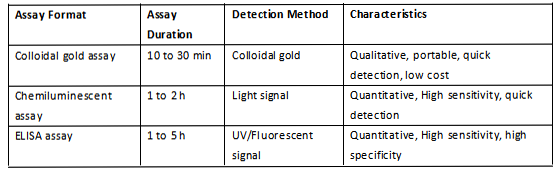
Table 3 Comparison of three assay formats.

Fig. 1 Mechanism of colloidal gold assay
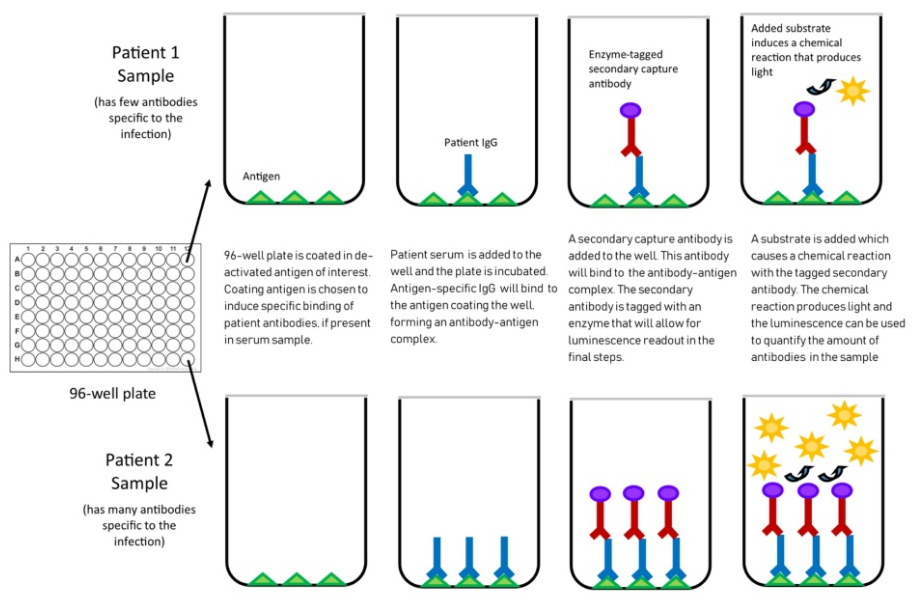
Fig. 2 Mechanism of chemiluminescent assay
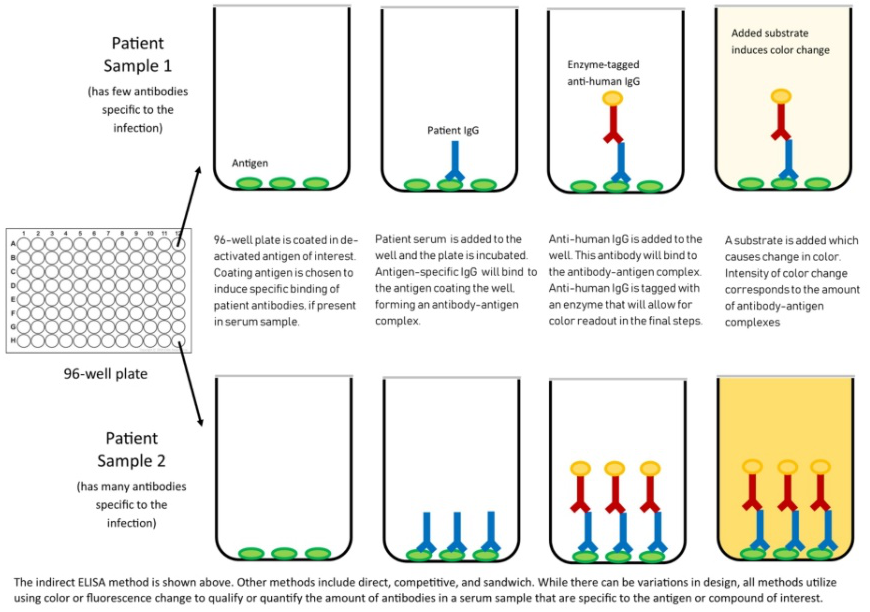
Fig. 3 Mechanism of ELISA
(Source: https://www.centerforhealthsecurity.org/resources/COVID-19/serology/Serology-based-tests-for-COVID-19.html)
In common, all three methods above use antigens to capture the target antibody. However, the accuracy of the test is significantly affected by the antigen reagents. To better support the development of serological test kits, ACROBiosystems has specifically designed and optimized SARS-CoV-2 antigen products for serological test kits, including S1, N, wild type RBD as well as mutant RBD proteins with various tags.
Our products are verified by a lot of customers using their serological assay platforms and we received a lot of positive feedbacks (Table 4). Recently, we got the good news that one of our customers successfully launched their chemiluminescent COVID-19 antibody detection kit using ACRO's biotin-labeled S1 protein. The sensitivity of this kit reached 93.2% and the specificity was 100%.
Application in GICA
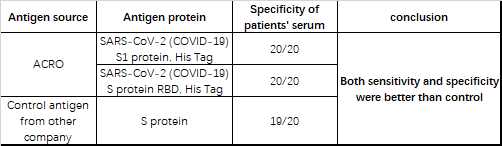
Application in ELISA

Table 4 Feedback data using ACRO’s SARS-CoV-2 reagents
What’s more, ACROBiosystems has developed the Detection of Anti-SARS-CoV-2 antibody assay kit (Spike protein RBD), which uses an indirect ELISA method. We coat SARS-CoV-2 S protein RBD, His Tag (Cat.No. SPD-C52H3) to detect anti-SARS-CoV-2 IgG antibody in serum.

Fig 4. Indirect ELISA method to detect anti-SARS-CoV-2 IgG antibody
ACRO’s verified protein reagents can meet your custom requirements and supply in large quantities. Click here to submit your request.
The sensitivity of N protein binding to Anti-N mAb is 0.02 ng/mL as verified by ELISA
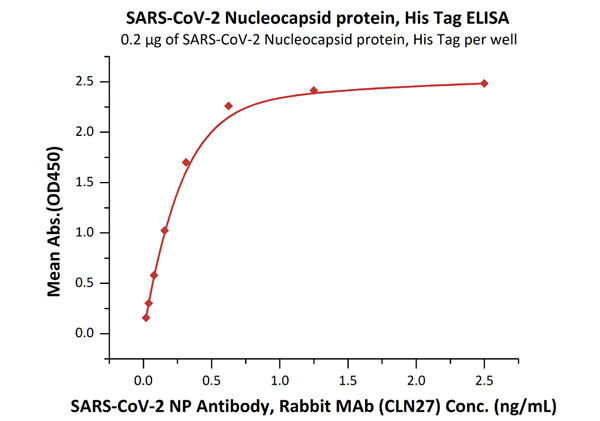
Fig.1 Immobilized SARS-CoV-2 Nucleocapsid protein, His Tag (Cat. No. NUN-C51H9) at 2 μg/mL (100 μL/well) can bind SARS-CoV-2 NP Antibody, Rabbit MAb (CLN27) with a linear range of 0.02-0.3 ng/mL.
The sensitivity of S1 protein binding to ACE2 protein is 0.2 ng/mL as verified by ELISA
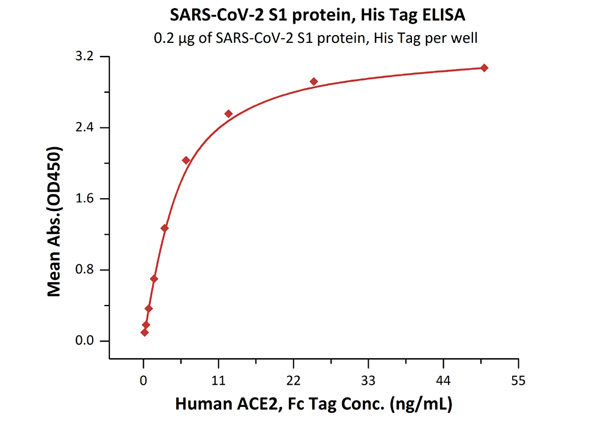
Fig.2 Immobilized SARS-CoV-2 S1 protein, His Tag (Cat. No. S1N-C52H4) at 2 μg/mL (100 μL/well) can bind Human ACE2, Fc Tag (Cat. No. AC2-H5257) with a linear range of 0.2-6 ng/mL.
The sensitivity of RBD protein binding to ACE2 protein is 8 ng/mL as verified by ELISA
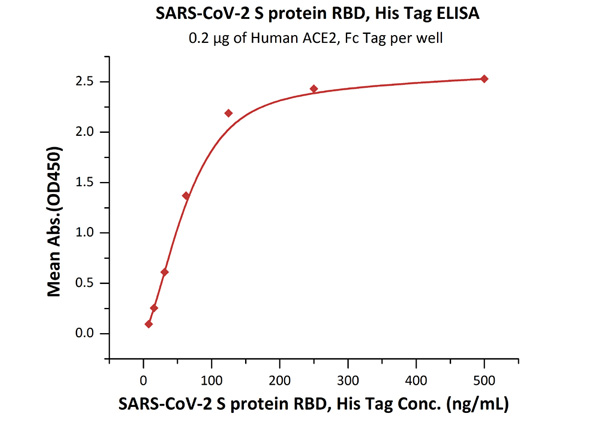
>>> Check all SARS-CoV-2 proteins and inhibitory kits.
Reference:
1. Antibody responses to SARS-CoV-2 in patients of novel coronavirus disease 2019