
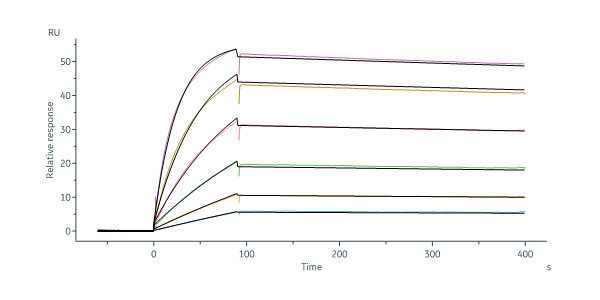

Biotinylated Mouse IFN-beta Protein, His,Avitag™ (MALS & SPR verified)

제품 번호/규격
가격
Availability
수량
IFB-M82E3-25ug
$360.00
In Stock - Delivery in 1-2 business days
IFB-M82E3-200ug
$1,420.00
In Stock - Delivery in 1-2 business days
IFB-M82E3
제품 금액 :
$ 0
신제품 제안 Request Quote
Contact Us
Contact Us
제품 금액:
$ 0
  • 제품 세부정보
  • 데이터 표시
  • Reviews & Citations
  • Important Statement
  • Resources
Synonyms

IFNB1, Interferon beta, IFN-beta, IFB, IFNB

Source

Biotinylated Mouse IFN-beta Protein, His,Avitag (IFB-M82E3) is expressed from human 293 cells (HEK293). It contains AA Ile 22 - Asn 182 (Accession # P01575).

Molecular Characterization

This protein carries a polyhistidine tag at the C-terminus, followed by an Avi tag (Avitag™).

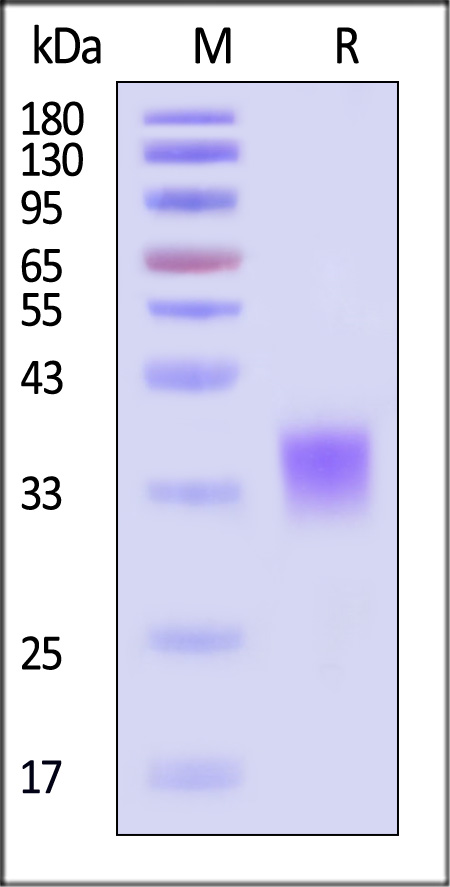
The protein has a calculated MW of 23.6 kDa. The protein migrates as 33-38 kDa when calibrated against Star Ribbon Pre-stained Protein Marker under reducing (R) condition (SDS-PAGE) due to glycosylation.

Labeling

Biotinylation of this product is performed using Avitag™ technology. Briefly, the single lysine residue in the Avitag is enzymatically labeled with biotin.

Protein Ratio

Passed as determined by the SABA assay / HABA assay / binding ELISA.

Purity

>95% as determined by SDS-PAGE.

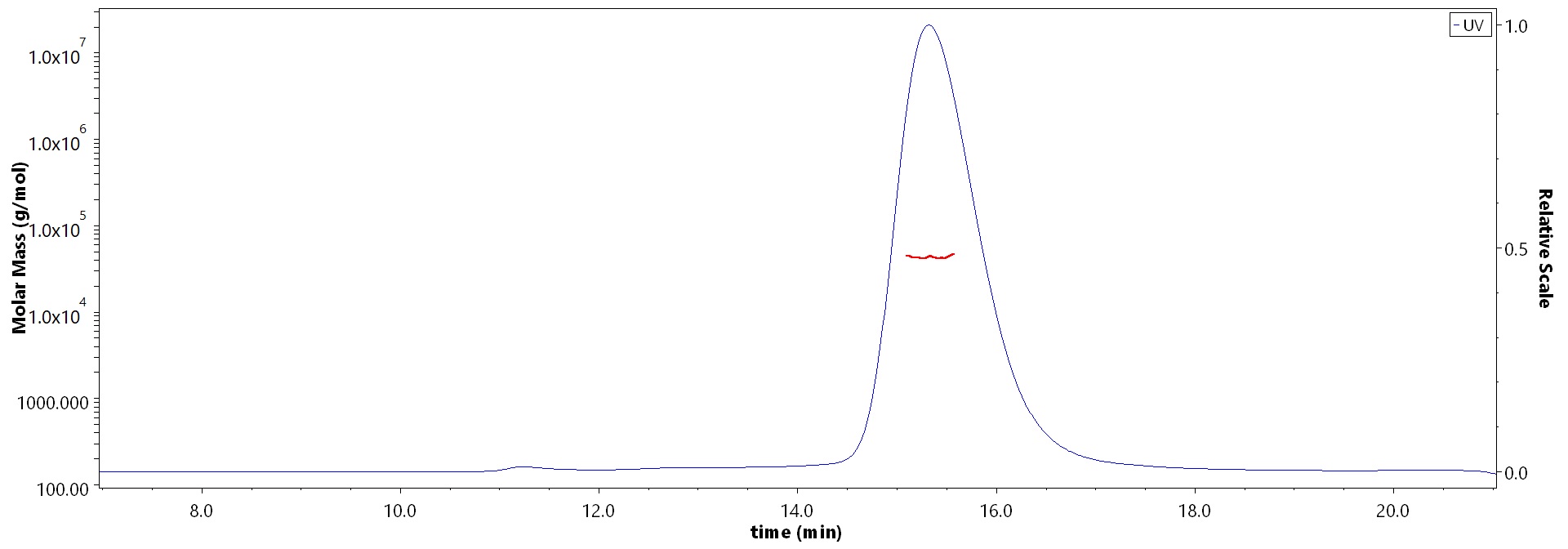
>90% as determined by SEC-MALS.

Formulation

Lyophilized from 0.22 μm filtered solution in PBS, pH7.4 with trehalose as protectant.

Contact us for customized product form or formulation.

Reconstitution

Please see Certificate of Analysis for specific instructions.

For best performance, we strongly recommend you to follow the reconstitution protocol provided in the CoA.

Shipping and Storage

This product is shipped at ambient temperature.

For long term storage, the product should be stored at lyophilized state at -20°C or lower.

Please avoid repeated freeze-thaw cycles.
This product is stable after storage at:
  • -20°C to -70°C for 12 months in lyophilized state;
  • -70°C for 3 months under sterile conditions after reconstitution.

배경 소개

Interferon beta(IFN beta) is type I interferon cytokine that plays a key role in the innate immune response to infection, developing tumors and other inflammatory stimuli. Signals via binding to high-affinity (IFR2) and low-affinity (IFR1) heterodimeric receptor, activating the canonical Jak-STAT signaling pathway resulting in transcriptional activation or repression of interferon-regulated genes that encode the effectors of the interferon response, such as antiviral proteins, regulators of cell proliferation and differentiation, and immunoregulatory proteins. IFNB1 is more potent than interferon-alpha (IFN-alpha) in inducing the apoptotic and antiproliferative pathways required for control of tumor cell growth (By similarity).

ACRO Scientific Leadership Award

Supporting the scientists driving cell & gene therapy forward

Apply Now